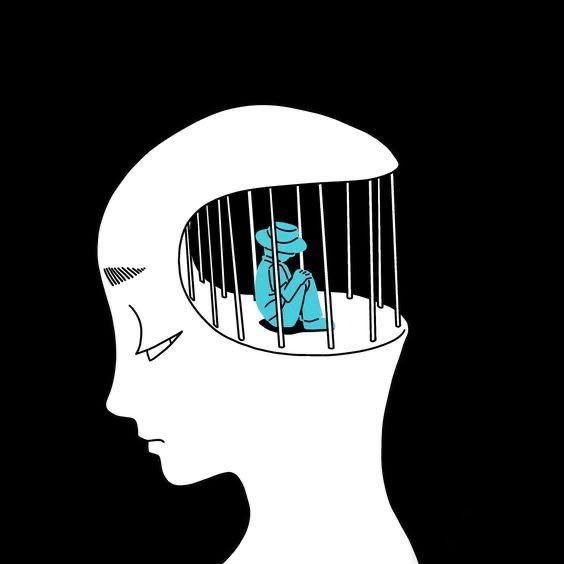
The Trap of Cognitive Bias
There is a popular theory, or what some might call "sweet talk," that claims, "If you are nice and humble, the world around you will be the same." This is an unsubstantiated claim.
Human beings are unequal creatures, and they will be forever. Many great things have emerged in the world in the name of revolution, claiming to make everyone equal when the revolution itself is not equal. Therefore, you can reach the conclusion that the world is not fair at all. But then, a question pops up: Should I still be nice and humble? I say yes, you should! Being "nice and humble" does not mean being naive or weak. Rather, it means retaining your humanity and capacity for cooperation, instead of letting bitterness turn you into a closed-off cynic. The mistake most people make at an early stage in their lives — or one that is somehow injected by their textbooks — is believing the phrase, "Be humble to the world, and the world will be kind to you." The second part of that phrase is untrue in so many cases. When a child grows up acting accordingly, they will eventually have a very bitter experience despite being humble and nice. Consequently, their judgment changes, and they establish a principle in their mind that "everyone around me is evil in some way, so there is no point in being humble." This is a disastrous mindset, and this cognitive bias slowly begins to affect their actions as well.
So, the question is, what should be your overall judgment of the world? The answer is that you must realize the world is a mix of both good and bad. There are 8 billion people in the world, which means there are 8 billion different thoughts and judgments. You can never expect everyone to understand you or be nice to you. You have to establish a mindset that dictates: even when I am being humble with someone, I know that I could still be betrayed or purged. However, I will not let my overall judgment be taken over by one or multiple bad experiences, nor will I apply that bitterness to every person I meet.
And how do you do that? In my opinion, the most effective solution is to find strong motivation from people who did the exact same thing, until you reach an age where you can use your own life experiences as motivation. In my case, my motivations come from three of the greatest figures in world history. Let us discuss them one by one.
Lee Kuan Yew
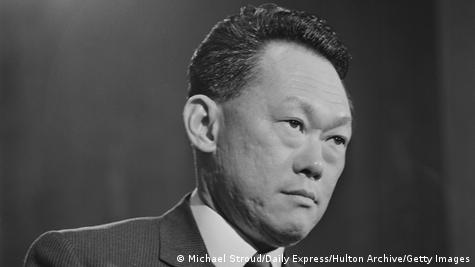
Lee Kuan Yew, the founding prime minister of Singapore, was very young when the Japanese invaded Singapore, and if you have read history, you must know about the extreme brutality of the Japanese occupation. Lee Kuan Yew survived a brutal death by a mere inch. Despite this, after he became the prime minister of Singapore, he established a very warm diplomatic and personal relationship with Japan. He actively invited Japanese investment and technology into Singapore, and even in his later years, he deeply appreciated the collective heroism of the Japanese people.
Deng Xiaoping
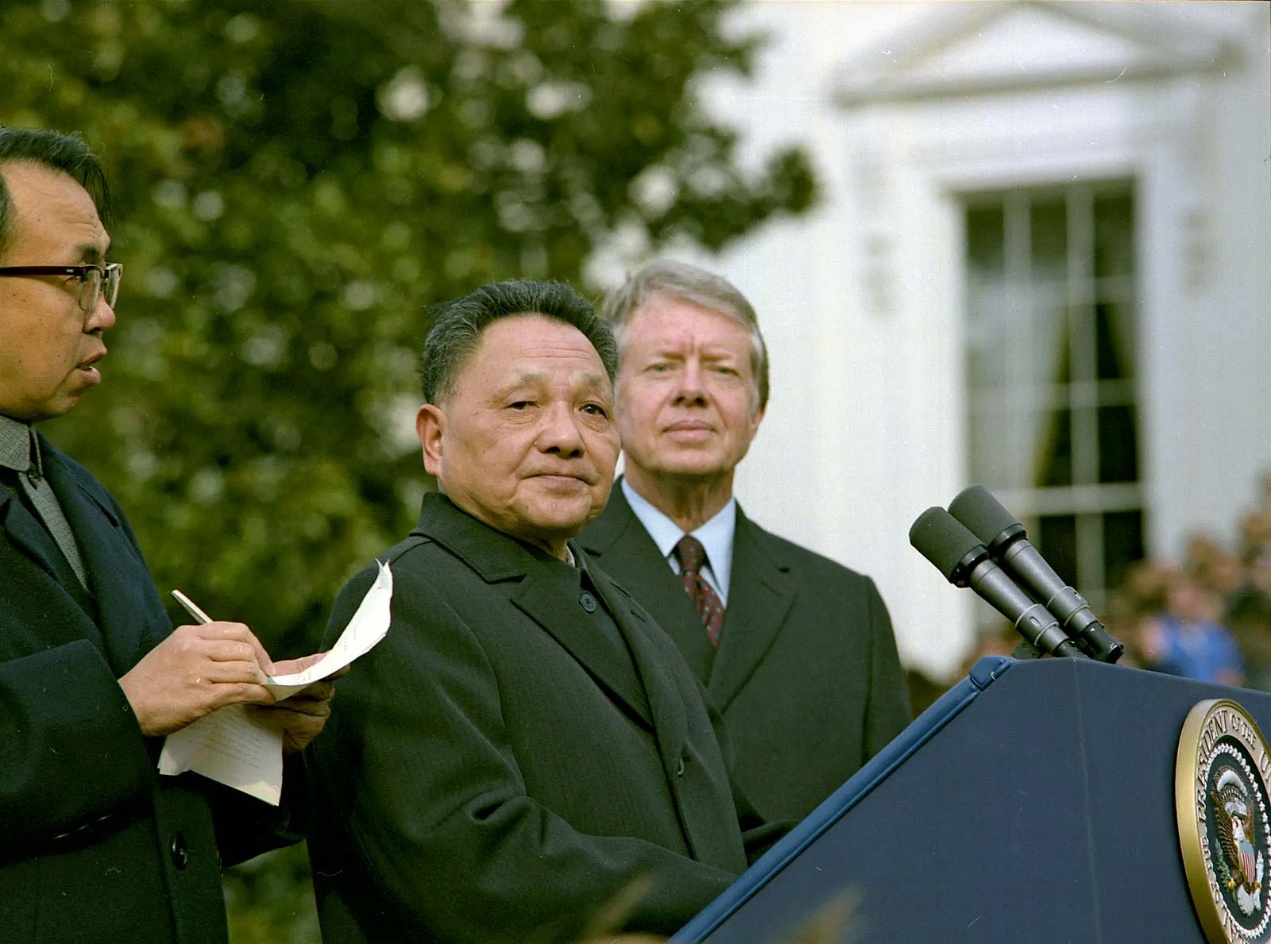
The second on the list is Deng Xiaoping, the man who saved China from the brink of collapse. He and Lee Kuan Yew shared many similarities. Deng himself fought against the Japanese as a senior military commander and political strategist, leading the armed resistance against them in the Sino-Japanese War. If you do not know about the Japanese massacre in Nanjing, also known as the "Rape of Nanking," it is one of the most brutal events in world history. Later, after China was liberated in 1949, he was sent into internal exile by his own leader, Mao Zedong, alongside whom he had fought for all those years. The reason was that Deng was not as rigidly revolutionary as a CCP leader was expected to be.
Soon after, Mao died, but in between, many things happened in Deng's life, and he narrowly survived death. He returned from the political wilderness in 1977 and became the paramount leader of China. In 1978, he visited three cities in Southeast Asia: Kuala Lumpur, Bangkok, and Singapore. All three of those developing cities he saw were better than Beijing. He returned to China, opened up its economy to the world, and established warm relationships with the very countries he had fought brutal wars against. Deng actively and warmly invited Japanese investment, technology, and management expertise immediately after becoming China's paramount leader. In fact, Japan played a foundational role in China's "Reform and Opening Up" strategy launched in late 1978. Deng had been a hardcore Marxist and Leninist up until this point, but he went to see the outside world, came back to China, and abandoned his lifelong belief in the blink of an eye. For perspective, it sounds like a priest giving up a religion he believed to be true for almost 60 years.
Xi Jinping
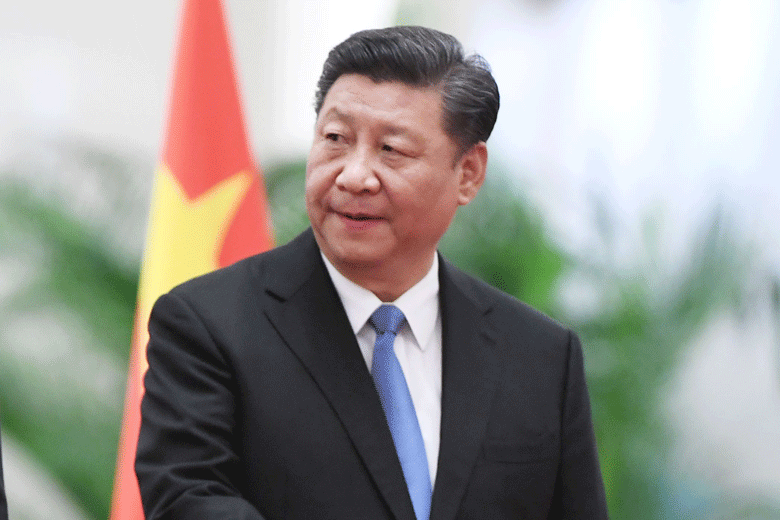
Xi Jinping, the current president of China — his father, Xi Zhongxun, was a revered vice-premier and a revolutionary comrade of Mao Zedong. In 1962, when Xi was just nine years old, his father fell out of favor with Mao, was sensationally denounced as a traitor, stripped of his power, and thrown into prison. During the Cultural Revolution, the family was evicted from their elite compound. As the child of a branded "counter-revolutionary," a teenage Xi Jinping was dragged onto stages in front of hostile crowds, subjected to "struggle sessions," and forced to listen to crowds hurl abuse at him. At one point, his own mother was forced to publicly denounce his father. This intense psychological pressure, relentless targeting, and public shame broke the family apart; one of Xi's sisters reportedly took her own life due to the immense persecution.
Xi went from a life of extreme privilege to living in a crude cave dwelling, sleeping on a heated brick bed, and eating coarse peasant food. Local history and state media often reference the four distinct miseries he had to endure: severe flea bites, abysmal food, grueling manual farm labor (like carrying heavy loads of manure), and the psychological isolation of trying to assimilate into an unfamiliar peasantry. Starving and miserable, Xi actually ran away back to Beijing after a few months. However, he was arrested, placed in a labor camp for deserters, and eventually sent right back to the caves of Liangjiahe, where he ultimately stayed for seven years.
Many children of purged officials grew up to hate the CCP, with some fleeing the country entirely. Xi did the exact opposite. He realized that in a chaotic world, the only way to protect oneself was to become more ruthless and disciplined than the system itself. He applied to join the Communist Party ten separate times, being rejected repeatedly due to his father's tainted reputation, before finally being accepted. Instead of letting the trauma warp his judgment into resentment, he used the harsh reality of Liangjiahe to steel himself, develop unbreakable emotional armor, and systematically climb the very party ladder that had once crushed his family. That is called courage.
There are other sides to this story involving those who let their judgment be consumed by a revenge mentality. Examples of this are North Korea and Iran. Both nations possess highly capable, intelligent people with glorious civilizations. Yet, instead of integrating into the world system, their leaders chose to suffer, and that suffering continues today. Vietnam could have easily followed the same path, as they suffered immensely as a country. Despite this, they joined the world order and are now among the fastest-growing economies in the world.
Once you fall into the trap of cognitive bias, it is incredibly difficult to break free.
In the end, I would say that once you fall into the trap of cognitive bias, it is incredibly difficult to break free. Once you fall, it will turn your entire mindset upside down. A permanent fear and paranoia will occupy your mind, and ultimately, you will never reach your full potential. Life can become very difficult from time to time, but never let those difficulties poison your thoughts. Instead, use those dark times to be more resilient, and never turn your back.